By The Armchair Booker
The lights dim. The crowd leans forward. And then — the music hits.
Whether it’s a war cry, a slow burn, or an all-out banger, a wrestler’s theme song does more than signal their arrival — it sets the emotional tone for everything that follows. In eWrestling, a great theme can say more in 30 seconds than a 1,500-word promo. It defines identity, stirs the crowd, and locks in the feel of a character before a single word is spoken.
So what makes entrance music effective? How do you choose the right track for your wrestler? And what hidden storytelling power lies in those opening chords?
Let’s break it down.
🎤 Why Theme Music Matters (Even in Fantasy Wrestling)
Even in a world where entrances are imagined and no real music plays, the idea of a theme song is still crucial. It’s a mental soundtrack — something that:
- Reinforces character identity
- Sets the tone for a segment or match
- Creates instant recognition
- Influences how readers visualize your entrance
When you list a theme song in your bio or use it to open a segment, you're giving readers a feeling to attach to your character. Done right, it becomes iconic — like “Metalingus” for Edge or “Real American” for Hulk Hogan.
🧠 What a Theme Song Should Convey
Great entrance music answers these questions:
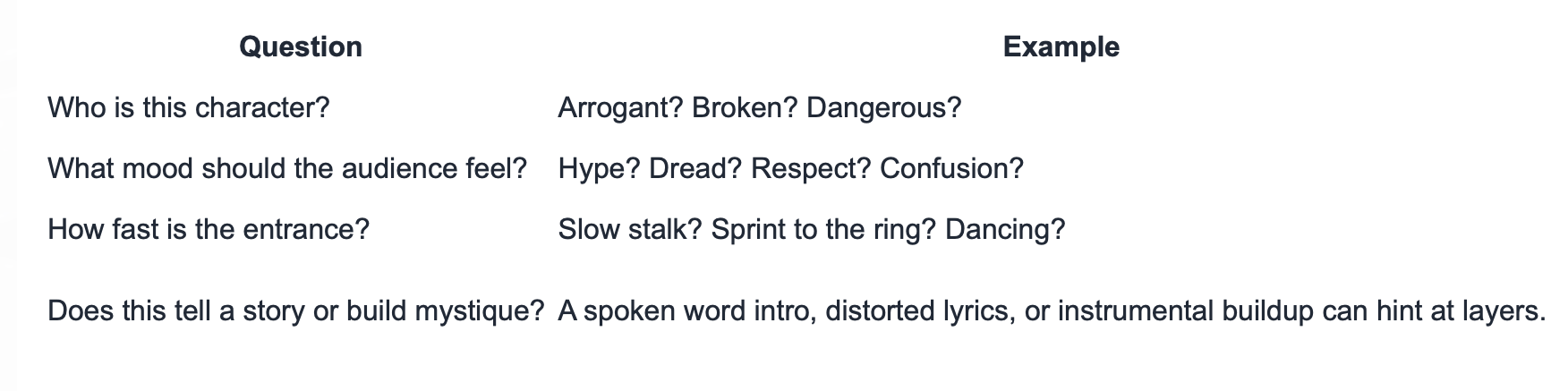
Theme music is an extension of your promo voice.
It doesn’t just accompany the character — it is part of them.
🎧 Choosing the Right Type of Song
1. The Hype Anthem (e.g., rock/rap/metal)
Perfect for: High-energy faces, dominant heels, athletic competitors.
Examples: “Indestructible” by Disturbed, “DNA” by Kendrick Lamar, “My Songs Know…” by Fall Out Boy
Why it works:
It pumps up the crowd and positions the character as a force to be reckoned with.
2. The Dark & Brooding Entrance
Perfect for: Anti-heroes, monsters, psychological characters.
Examples: “The End Is Here” by Jim Johnston, “People Are Strange” by The Doors, slow violin or ambient noise tracks.
Why it works:
It creates atmosphere, making the audience uncomfortable or intrigued.
3. The Theatrical Statement
Perfect for: Over-the-top gimmicks, royalty, manipulators, egomaniacs.
Examples: Classical music, 80s power ballads, or soundtracks from movies.
Why it works:
It turns the entrance into performance art. Think Ric Flair or The Fiend.
4. The Throwback or Unexpected Pick
Perfect for: Comedic characters, nostalgia acts, or dissonant personalities.
Examples: “Barbie Girl,” “Take On Me,” sitcom themes.
Why it works:
It subverts expectations, making the entrance itself a punchline or a moment.
🧩 Examples of Theme Music as Storytelling
🔹 “Boiling Point” by Three Days Grace
Used for a character on the verge of snapping. The lyrics suggest internal rage — even if the character is smiling on the outside.
🔹 “Runaway” by Kanye West
Used for a heel who knows they’re broken. It adds tragedy to a villain's arrival, framing them as self-aware but toxic.
🔹 “Electric Feel” by MGMT
Used by a cocky, seductive face with psychedelic gear and surreal entrance visuals. The crowd loves to hate them — or hates to love them.
Each track enhances the character’s psychology. The song becomes a shortcut to understanding them.
🔁 Evolving Themes Over Time
Changing your theme song can signal:
- A heel/face turn
- A redemption arc
- A new faction or alliance
- A character reboot or breakdown
Example: A fallen champion who once had an upbeat, victorious theme now enters to a slow, haunting remix — signaling they’re not the same anymore.
Let your music evolve with your story.
💡 Tips for Choosing a Theme
- Close your eyes and picture the entrance. What do you see? What fits that vision?
- Don’t just pick your favorite song. Pick what serves the character, not just your playlist.
- Test the intro. The first 10 seconds matter most. That’s the hook.
- Think about what the crowd would chant, sing, or react to.
- Avoid overused themes — unless your take is so fresh that it flips the meaning.
🏁 Final Bell: Make Them Hear You Before They See You
In fantasy wrestling, every advantage counts. The theme song is your secret weapon — a chance to build identity, pop the crowd, and deepen the illusion of your presence.
When someone sees your name on the card, they should hear the music in their head.
So next time you write an entrance?
Don’t just walk out.
Make a statement.
Make it sing.